Case study · Freelance client project · Solo
AAA Green Rentals
Car rental booking site and staff operations dashboard.
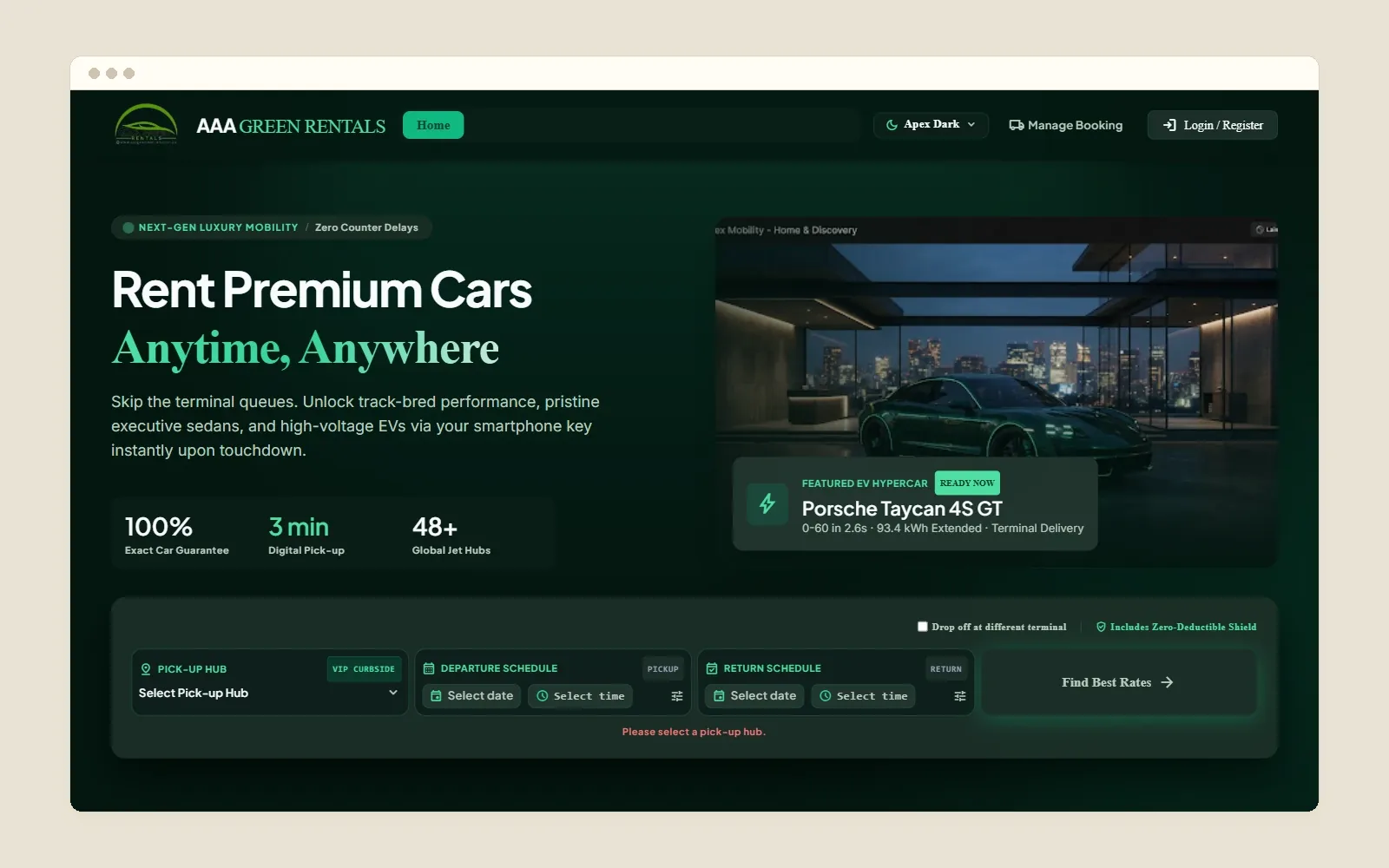
Customers book and pay deposits online. Staff handle dispatch, returns, courtesy vehicles, inspections and invoicing from one dashboard on the same database.
Problem
The public booking site and the branch operations had to work from the same records, so an online booking reaches the staff who dispatch the car. Payments came in two shapes: one-off deposits and recurring rental instalments.
What I built
- Customer site: sign-up with Google OAuth and an emailed one-time code, a booking flow with add-ons and protection packages, Stripe deposits, document upload and self-service booking changes.
- Dispatch and return with odometer and fuel capture, plus extra-kilometre billing.
- Terms and conditions signed digitally at dispatch and saved as a PDF contract.
- Courtesy and workshop vehicles, vehicle inspections with PDF reports, and vehicle document history.
- A payments console with receipts, payment reminders and a reconciliation job.
- Staff accounts with roles, in-app notifications and booking analytics.
Architecture and key decisions
- One gateway per payment type
- Stripe Payment Intents take one-time deposits, and the reservation is saved only after the payment succeeds. PayAdvantage runs recurring direct debits. Both gateways send signature-checked webhooks into one payment ledger.
- Courtesy-vehicle chain
- A replacement vehicle can itself be replaced, and every swap still links back to the original booking, so staff always see the full history.
- Documents are versioned, not overwritten
- Registration, insurance and licence files are kept on AWS S3 with their full history and viewed in the browser with PDF.js.
- Automatic insurer notice
- When a courtesy vehicle goes out, the insurer is emailed with the driver's licence attached, removing a manual step that was easy to forget.
- Polling instead of WebSockets
- The dashboard checks for new notifications every 30 seconds, which is enough for an internal tool and simpler to run.
What I learned
- Payment state has to come from the gateway, not the browser, so nothing is stored until Stripe confirms it.
- Matching each payment provider to one job kept both integrations simple.